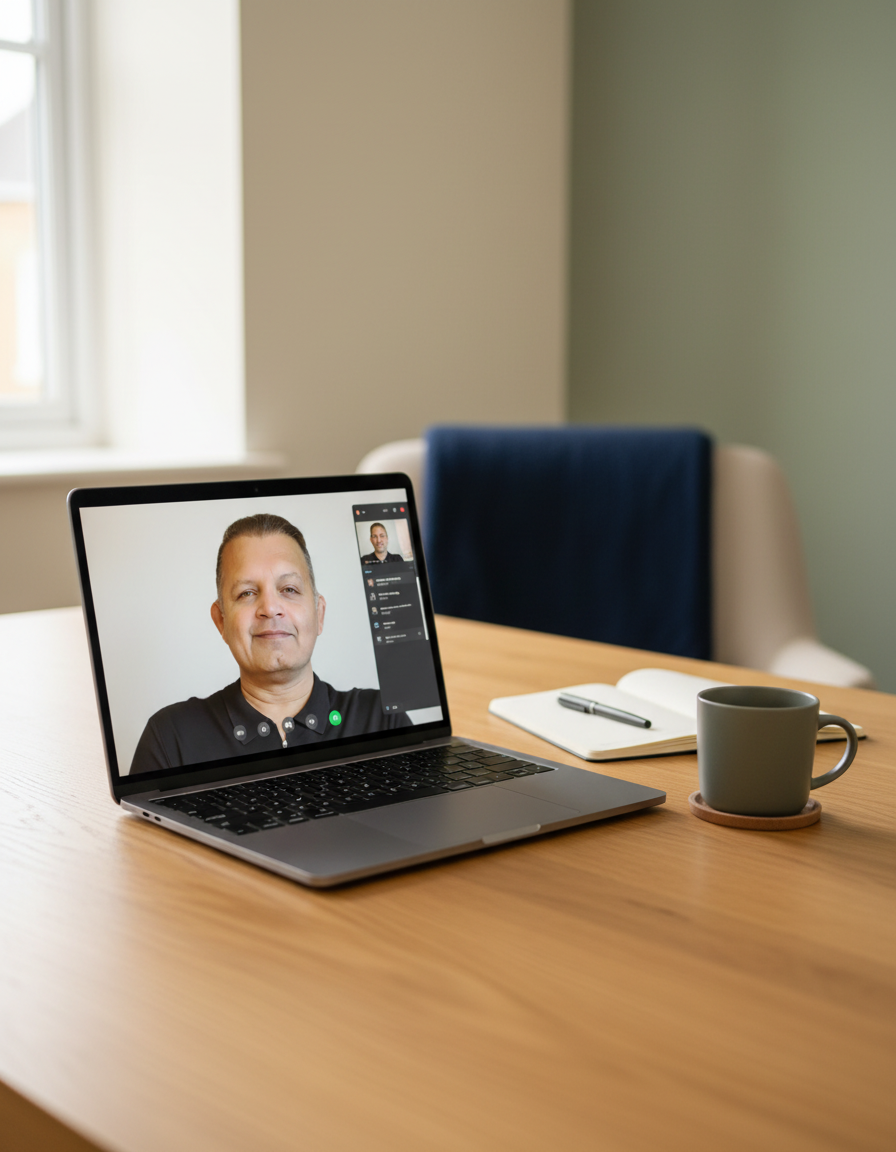
In Hypnosis and Coaching, there is a useful distinction between two broad kinds of states of consciousness. Uptime keeps attention outward and alert — eyes open, oriented to the room, absorbed but in contact with the present moment. It tends to suit coaching and the NLP approach, where the work needs steadiness under pressure and a resourceful state you can call on in real situations.
Downtime turns attention inward and still — eyes closed or unfocused, the body settling, the external world receding. It tends to suit hypnotherapy, where the work benefits from inward focus, imagery, and reaching the automatic layer where habits and reactions live.
Most sessions move between the two. Neither is better, and neither is exotic — they are natural states of mind attention already passes through many times a day. Naming them simply makes it easier to choose a useful one.
These two states map neatly onto the three-part attention framework above. Downtime leans toward Internal Attention; uptime leans toward External Attention and Task-Focused Attention. Naming both the state and the direction of attention is what keeps the work coherent.